Author: thedustytalon

  • What Happens if I Wash This?

    What Happens if I Wash This?

    There comes a point in making things when curiosity becomes more persuasive than caution.

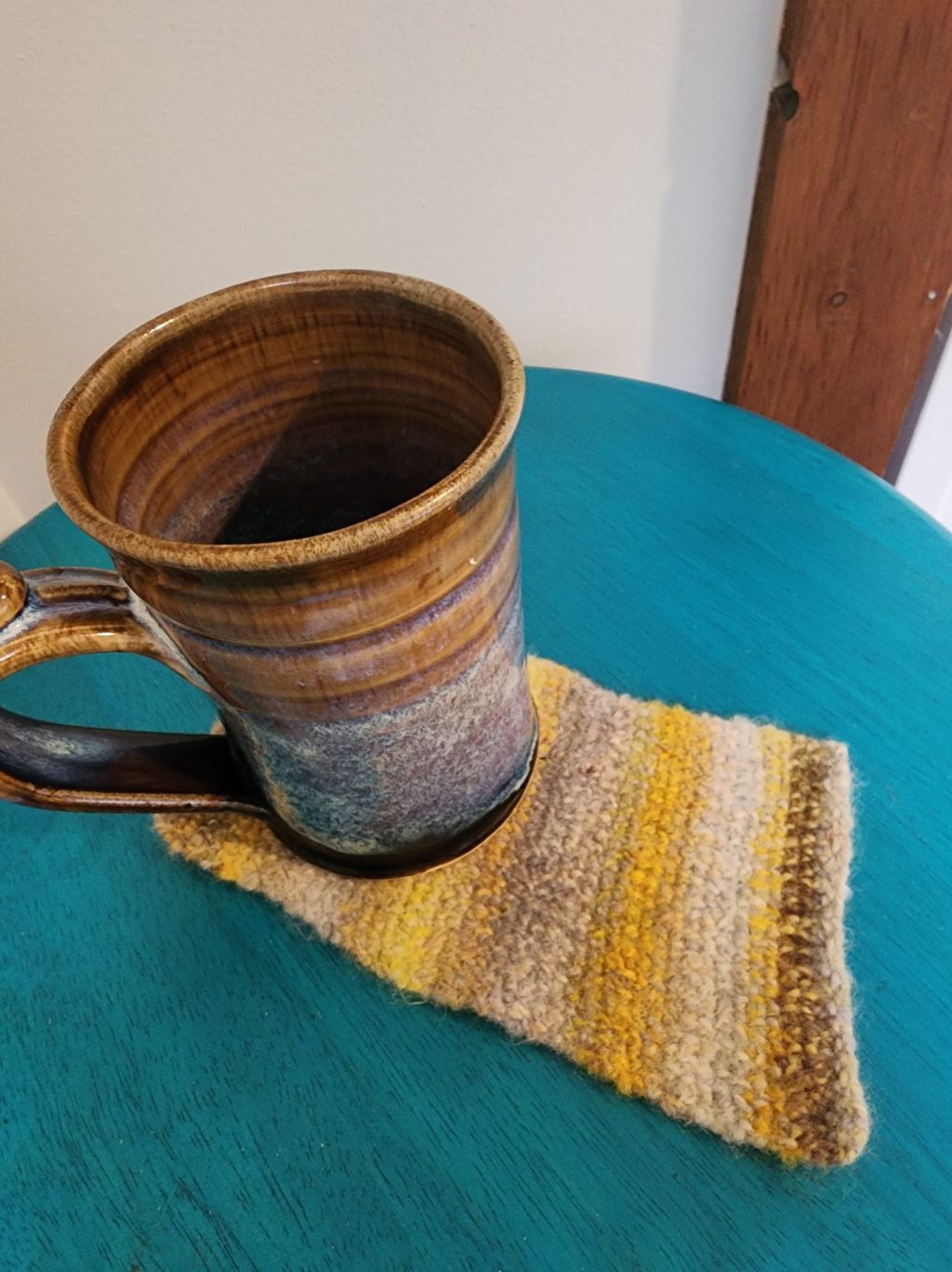
    I had a crocheted mug rug made from my own Polwarth handspun. It was perfectly serviceable as it was.

    So naturally, I put it in the washing machine.

    Not because something had gone wrong.

    Because I wanted to know what would happen.

    The Experiment

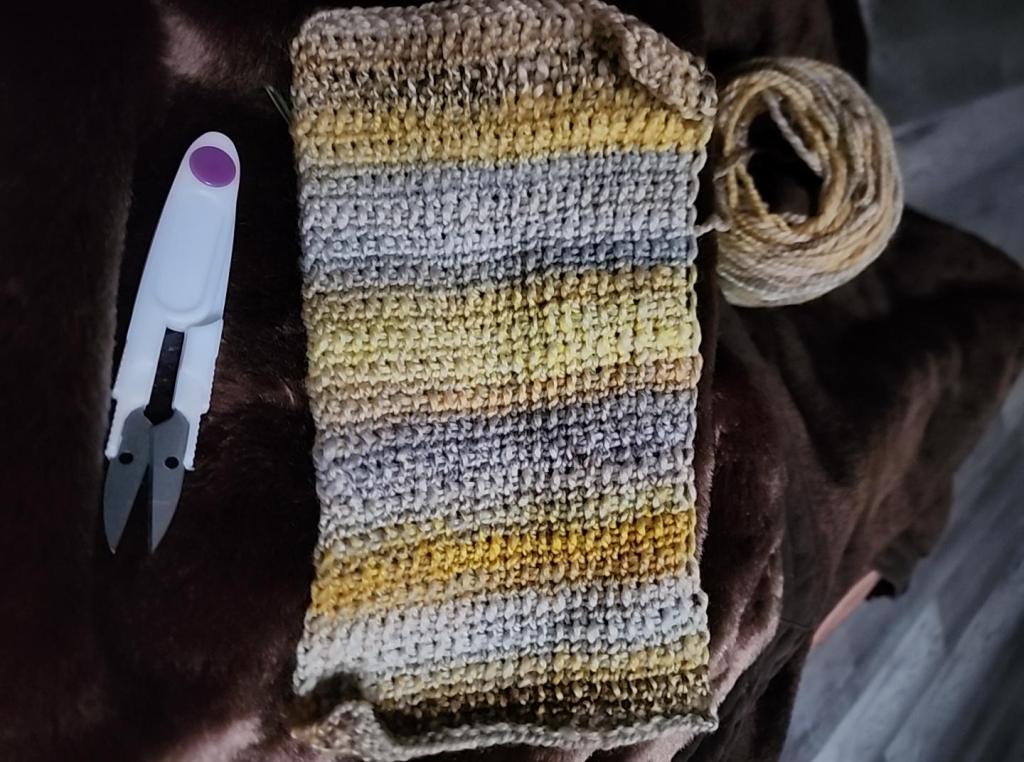
    The original piece began with 25 chains and was crocheted in the Tunisian stitch into a simple rectangle.

    The plan was to deliberately full it: let heat, water and agitation encourage the wool fibers to grab onto one another, shrinking the fabric while making it denser and sturdier.

    I knew it would get smaller.

    What I didn’t know was how much smaller. How much more dense? Will I still be able to use it?

    That’s one of the interesting things about working with wool. You can understand what the fiber is supposed to do, but eventually you have to let the actual wool answer the questions.

    So into the laundry it went.

    Out Came A Different Fabric

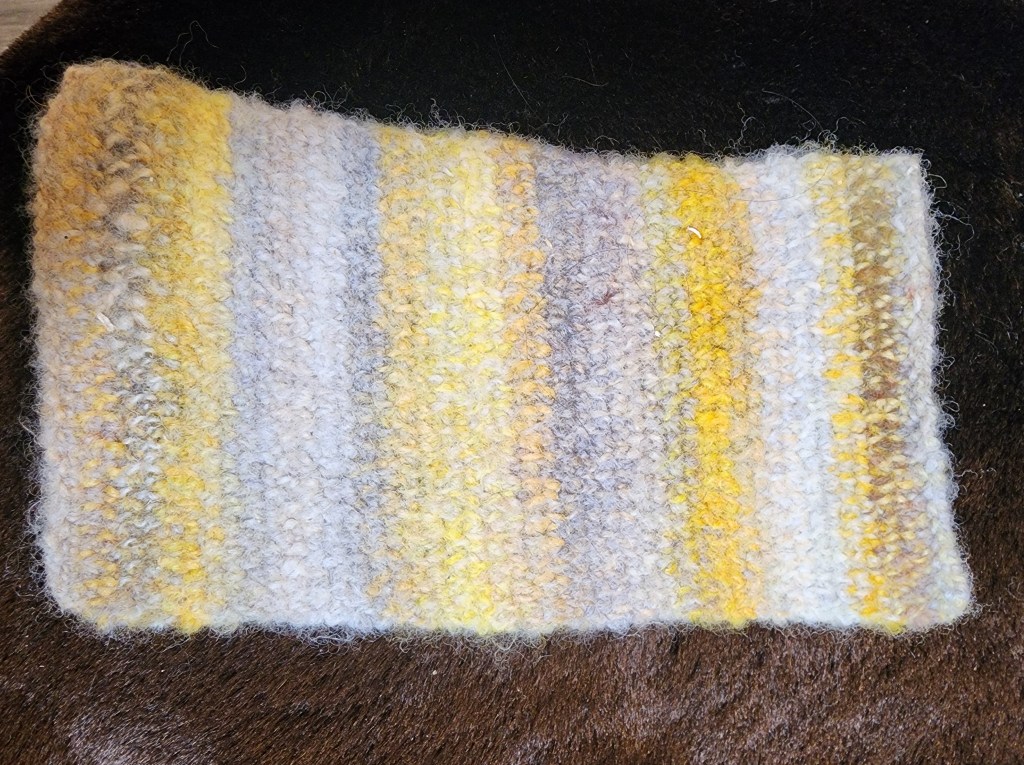
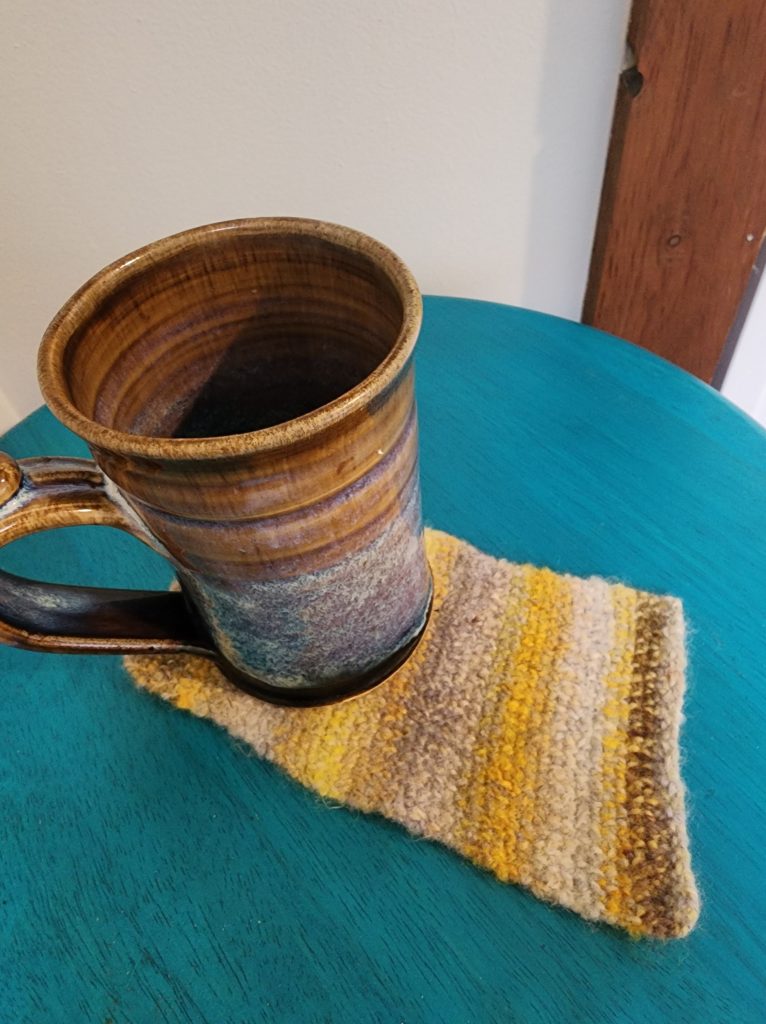
    After washing, the mug rug measured about 4 x 6 5/8 inches.

    The individual crochet stitches had softened into the fabric. The surface was denser. The whole thing felt less like a piece of crochet and more like a small piece of wool cloth.

    And it worked.

    A mug fit. There was even room left for a spoon.

    But if we’re being reasonable-and apparently we’ve decided to start doing that-it could stand to be a little larger.

    A mug rug ought to have room for the mug, the spoon and whatever small baked good has volunteered to accompany the coffee.

    So We Try Again

    The next one starts bigger.

    Instead of 25 chains, 30.

    That’s the part of making that I love: the first piece doesn’t have to be wrong for the second one to teach you something.

    Make the thing.

    See what it does.

    Change one variable.

    Make the thing again.

    Of course, changing the wool means changing another variable whether I intended to or not. Different breeds and blends don’t necessarily full at the same rate, and fibers such as silk or bamboo can change the behavior of the finished fabric.

    So 30 chains isn’t a formula.

    It’s another experiment.

    From The Workbench

    There will eventually be finished pieces, photographs, measurements, listings, and all the tidy information that belongs with them.

    This isn’t that part.

    This is the part where there’s wool on the table, something slightly experimental in the washing machine, and a notebook nearby because we’re probably going to want to remember what happened.

    Welcome to the Workbench.
  • The Gilded Thistle

    The Gilded Thistle

    Some names are chosen.

    Others seem to have been waiting for the thing that belonged to them.

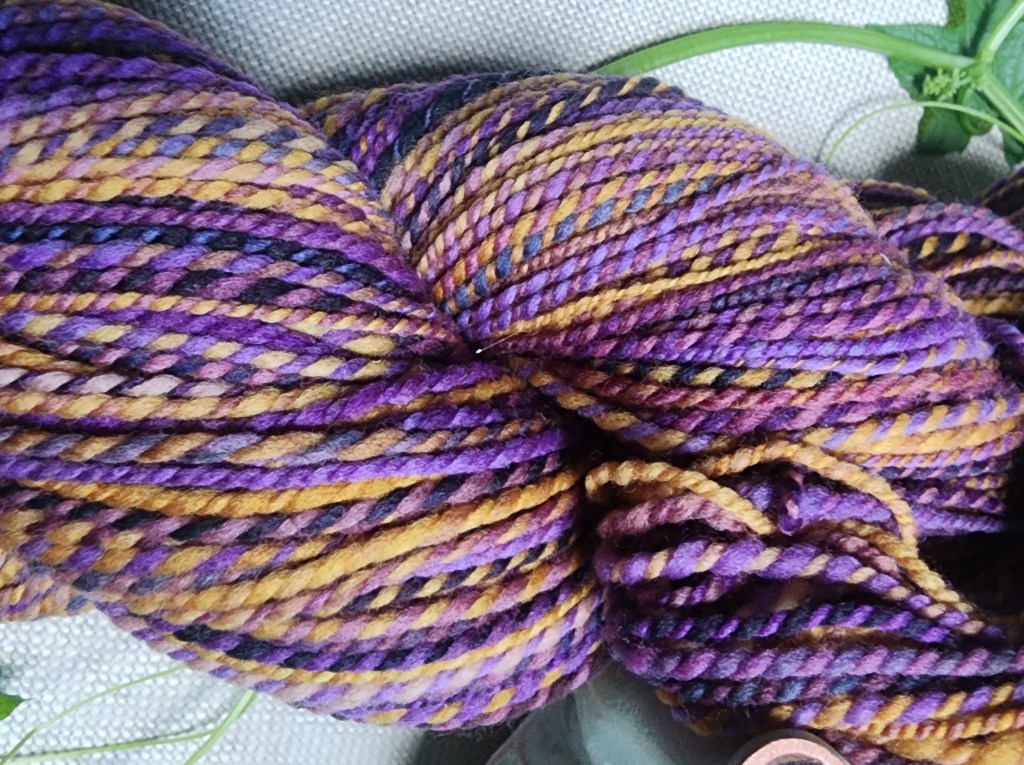
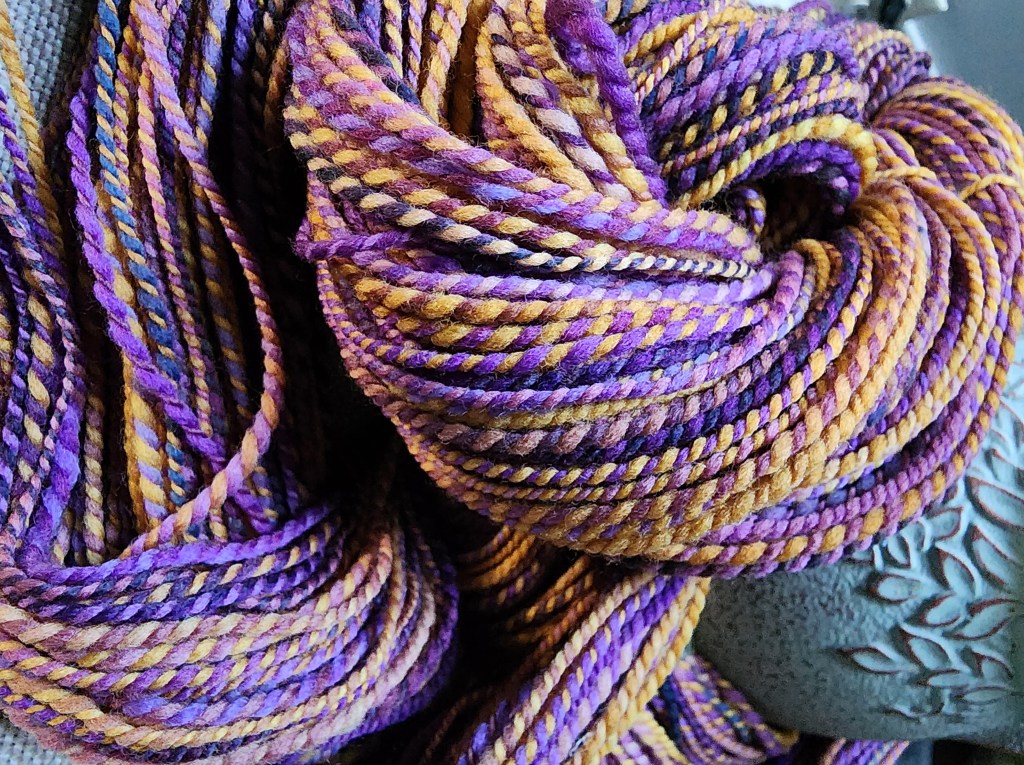
    The Gilded Thistle began in color: deep purples and blues, flashes of brightness and something just a little unruly running through it. As the fiber became yarn, it stopped feeling like a collection of colors and started becoming a place-something wild growing where perhaps it wasn’t expected to.

    A thistle is not a particularly polite plant.

    It protects itself. It grows where it will. its flowers are beautiful, but it makes no promise that beauty will be soft or accommodating.

    That suited this skein.

    The Story Grew

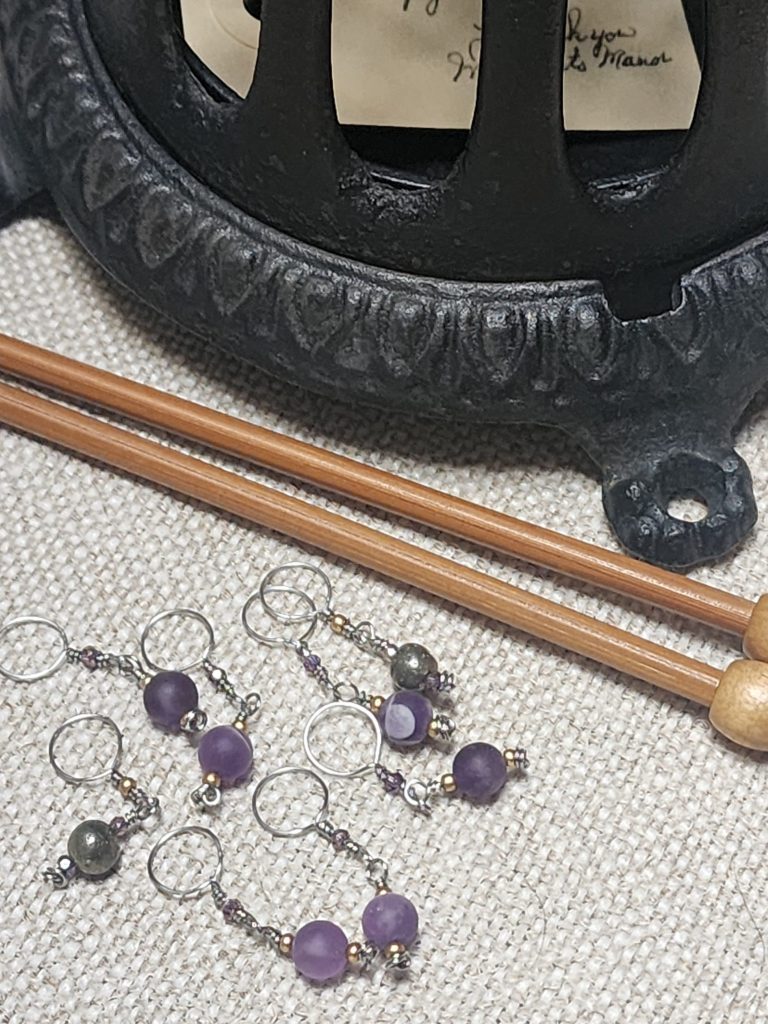
    Later came the trailmarks.

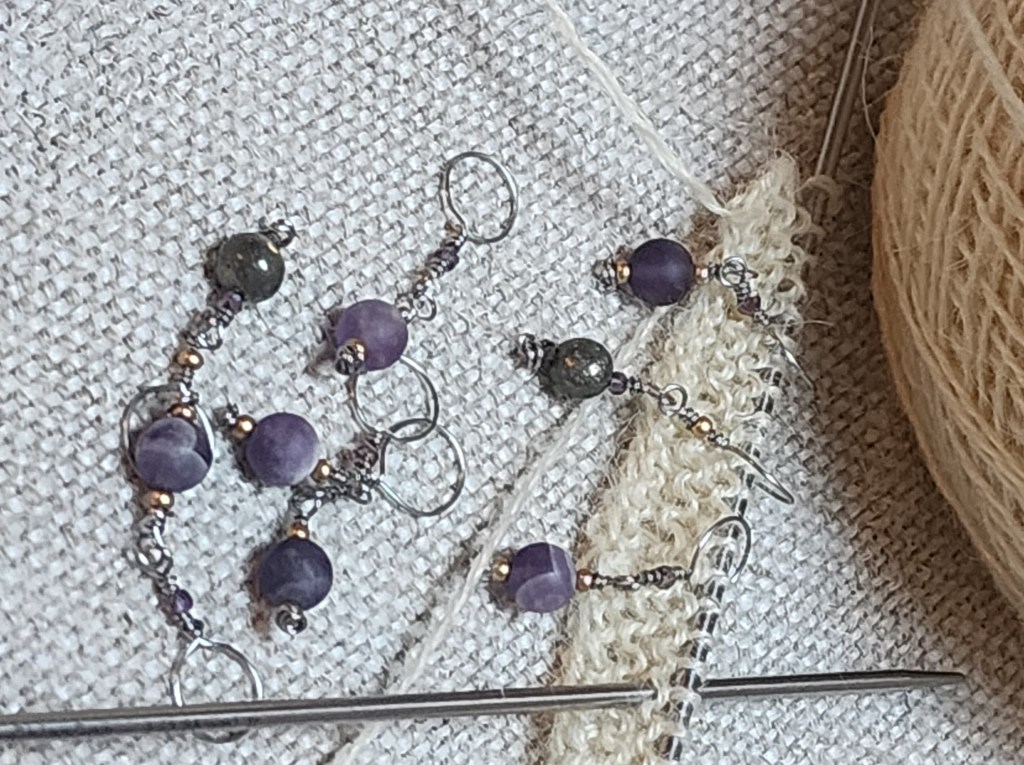
    Amethyst belonged there almost immediately, but the pyrite changed them. Against all that purple, those rough little pieces of metallic stone brought in exactly what the name had been asking for.

    The gilding.

    Not polished gold. Not something pristine.

    Something found among the thorns.

    And suddenly the yarn wasn’t simply carrying a name anymore. There was a little world forming around it-fiber, stone, color and story all speaking the same language.

    From the Shelf

    The Gilded Thistle may have begun as handspun yarn, but its story became larger than the skein.

    That’s what this shelf is for.

    To keep the parts that wont fit on a tag.

  • Why The Heck Does Wool Shrink?

    Why The Heck Does Wool Shrink?

    You put a perfectly good wool thing in the wash, It goes in one size and comes back out considerably smaller, thicker, and perhaps capable of fitting a moderately fashionable squirrel.

    What the heck happened?

    The short answer is that wool fibers are covered in microscopic scales.

    Those scales are part of the outer surface of each fiber. Add moisture, heat, soap, and most importantly-agitation, and the fibers start moving against one another. The scales catch. The fibers migrate closer together. Eventually, they become tangled tightly enough that they don’t simply return to where they started.

    The fabric gets smaller.

    But it also gets denser, thicker, and more cohesive.

    And that’s where things get interesting.

    Shrinking, Felting, and Fulling Aren’t Quite the Same Thing

    We tend to call all of it “Shrinking”, but there are useful distinctions.

    Shrinkage simply means the finished object got smaller. Wool can shrink somewhat without becoming heavily felted.

    Felting usually refers to loose wool fibers being deliberately tangled together to create fabric. Needle felting does this mechanically with barbed needles. Wet felting uses moisture, agitation and often soap.

    Fulling starts with fabric that already exists-something knitted, crocheted, or woven-and deliberately encourages those wool fibers to tangle together.

    That’s what happens when I make a wool piece larger than I ultimately want it, then wash it intentionally so the stitches begin to disappear and the fabric becomes denser.

    Same wool, very different fabric.

    Why Doesn’t Every Wool Behave the Same Way?

    Because “wool” isn’t one material with one set of characteristics.

    Different sheep breeds produce fibers with different diameters, staple lengths, crimp, scale structures, and other characteristics. How the fiber was processed matters too. How the yarn was spun matters. Blending wool with bamboo, silk, synthetic fibers, or other materials can change how the finished fabric behaves.

    Even two pieces that look similar before washing can come out differently.

    That’s one of the reasons fiber work involves experimentation.

    Sometimes you can make an educated prediction.

    sometimes the wool has other plans.

    What About Superwash Wool?

    Superwash wool has been treated so those microscopic scales don’t interact in the usual way. Depending on the treatment, the scales may be altered or coated to reduce their ability to grab onto other neighboring fibers.

    That’s why superwash wool can generally tolerate washing better without felting the way that untreated wool does.

    It also means that if your goal is intentional fulling, untreated wool is usually the much more cooperative accomplice.

    So is Shrinking Wool Bad?

    Only when you didn’t mean to do it.

    Accidentally turning a beloved sweater into children’s clothing? Bad day.

    Deliberately using the same behavior to make a dense, sturdy piece of wool fabric?

    That’s not a mistake.

    That’s a technique.

    Before Fulling
    After Fulling

  • The Letter Scale

    The Letter Scale

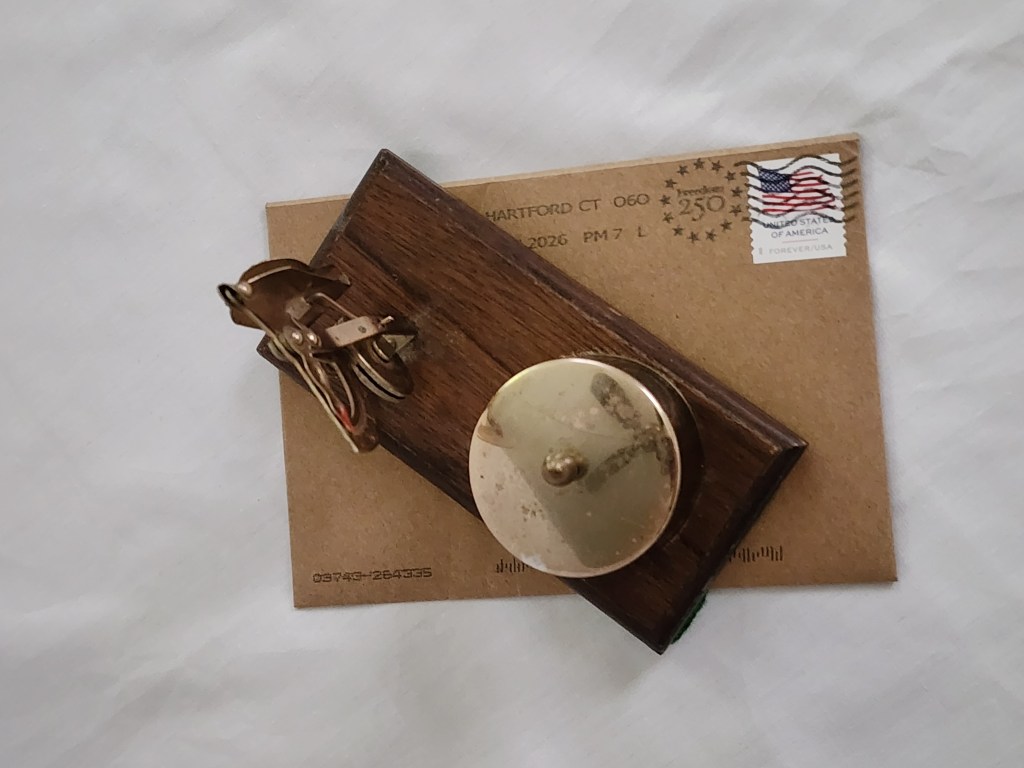
    Some objects survive because someone keeps finding a reason not to throw them away,

    This old letter scale was made for a wonderfully ordinary purpose: weighing the mail. Long before postage could be calculated with a few taps on a screen, something like this earned its place on a desk by doing one small job well.

    Time has left its marks. That’s part of why it belongs here.

    The Dusty Talon’s Found collections isn’t about making old things look new again. It’s about noticing the objects that still have something to say-and giving them room for another story.

    Found at The Dusty Talon

    This piece is part of the Found Collection-objects chosen for their character, history and the simple fact that they deserved to be noticed again.

    Visit The Dusty Talon on Etsy for current availability, condition details, measurements, other interesting facts and additional photographs.

  • Trailmarks

    Trailmarks

    What are trailmarks?

    Small markers for finding your way through the work.

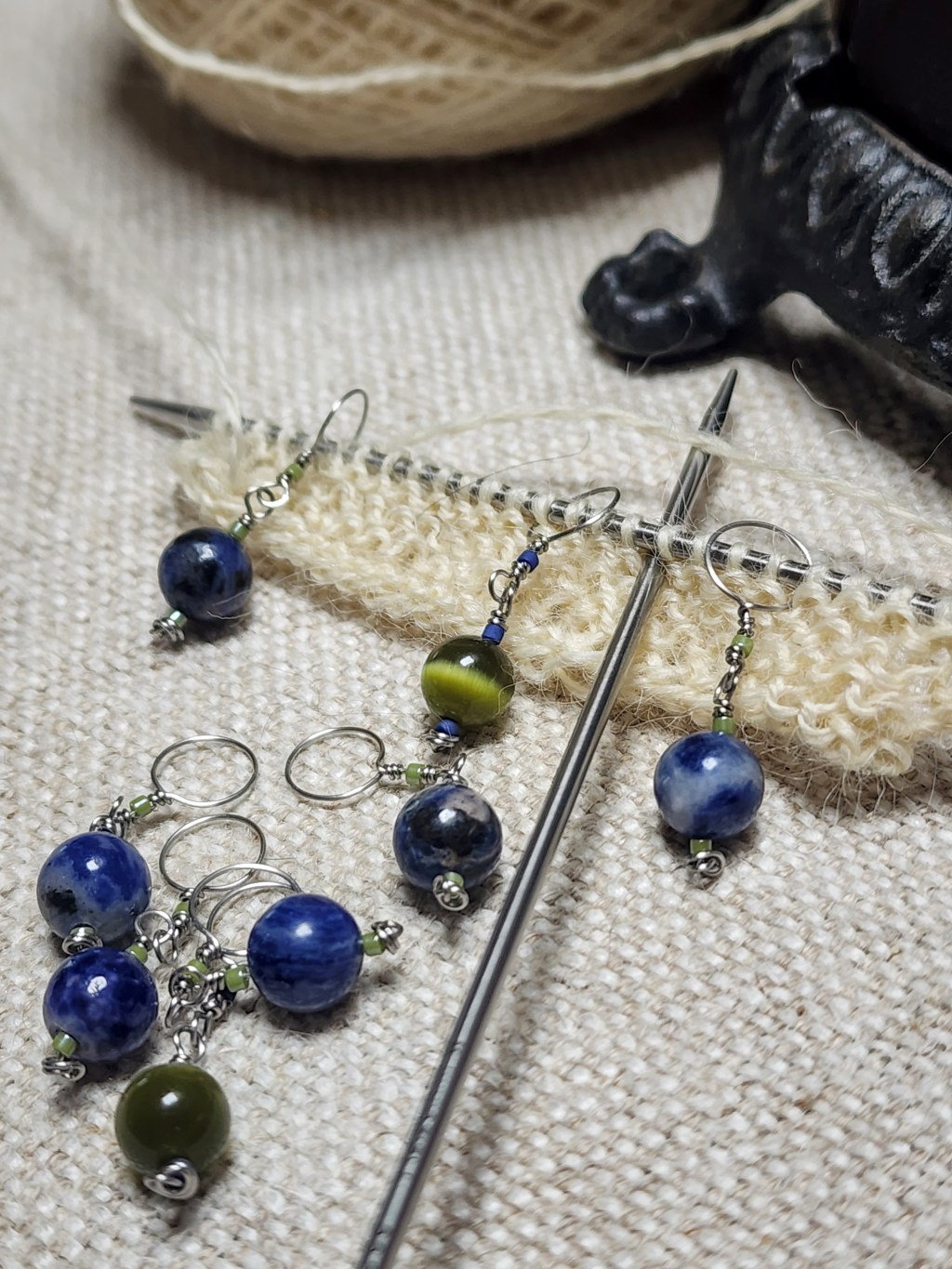
    Trailmarks are The Dusty Talon’s take on stitch markers: lightweight, useful little objects made by hand from stone, glass, metal and whatever else belongs in the story.

    They’re designed to move smoothly through the work without becoming the thing you’re fighting with. Each collection is made in small sets and built around its own materials, colors, and character-sometimes created alongside a particular skein, sometimes simply because the pieces belonged together.

    Useful first. Beautiful because useful doesn’t have to mean boring.

    Made to mark the work. Made to belong to it.

    Every set of trailmarks is assembled by hand in small batches, with materials chosen for the story they tell together. Some begin with a skein of handspun. Others begin with a stone, color or an idea that refuses to leave.

    No two collections need to follow quite the same trail.

  • The Gilded Thistle

    The Gilded Thistle

    Born from deep violet and flashes of gold, The Gilded Thistle is a handspun yarn with a little wildness left in it. Texture and color shift through the skein rather than settling into perfect repetition-the mark of something made slowly, by hand, and allowed to become itself.

    The Details

    • 2-ply Handspun
    • Weight: 119 g
    • Yardage: 326 yards
    • WPI: 16
    • Weight Class: DK