Category: Glossary

  • Worsted vs. Woolen

    Worsted vs. Woolen

    Two ways to spin a story.

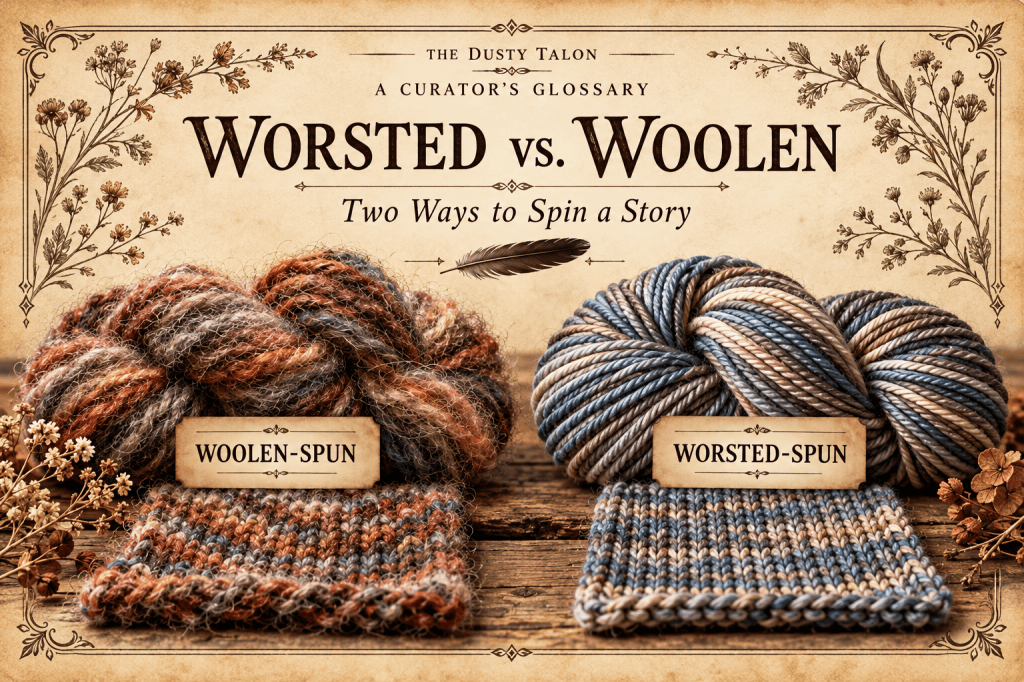
    Worsted-spun and woolen-spun describe how fibers are prepared and spun into yarn. Each approach creates a different character.

    In traditional worsted spinning the fibers are combed into a parallel arrangement. The spinner draws them out before allowing twist into that section, helping preserve their alignment. The resulting yarn tends to be smooth and dense with clear stitch definition.

    Traditional woolen spinning uses carded fibers arranged less uniformly. Twist enters the fibers as they are drawn out helping create an airy, lofty yarn with a softer outline.

    Handspinning also leaves plenty of room between these approaches. A spinner can combine preparation and drafting methods to create yarn with qualities of both.

    Neither method is better for every project. Fiber choice, twist and construction all contribute to how the finished yarn feels and behaves.

    Curator’s Note: Worsted-spun describes a method. Worsted weight describes a thickness category. A worsted-spun yarn can be fine or bulky, and a worsted-weight yarn can be spun using either approach.
  • Necklace Length

    Necklace Length

    A few inches can change the whole feel of a necklace.

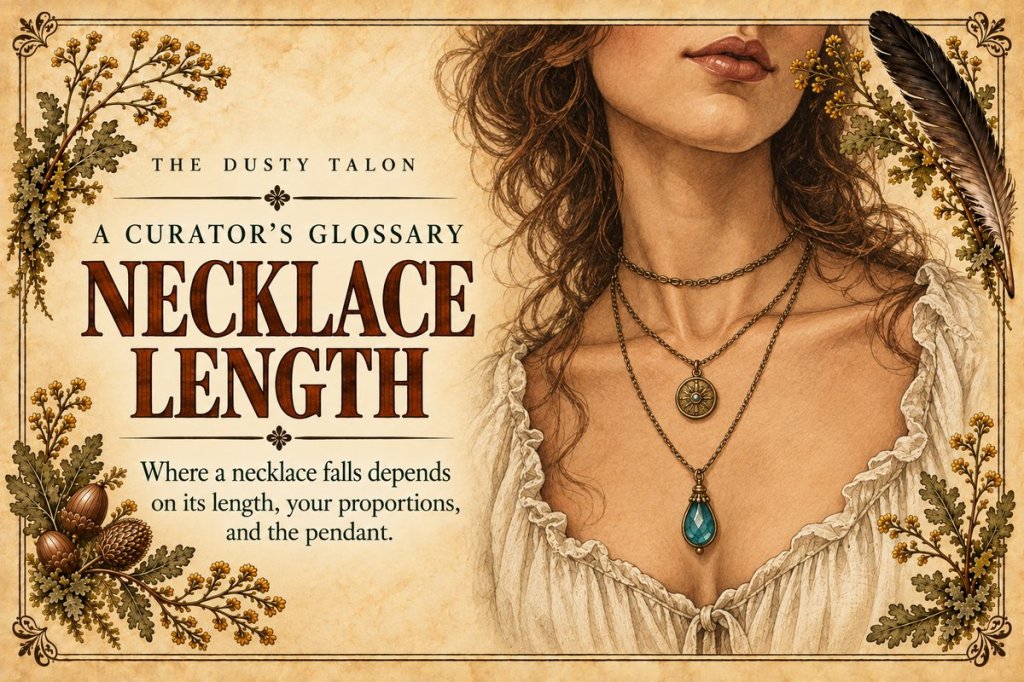
    Necklace length usually describes the chain or cord measured end to end including the clasp. A pendant may hang below that length so check whether its dimensions are listed separately.

    Common lengths offer a starting point:

    • 14-16 inches: a shorter fit. Often near the neck or it’s base. A choker.
    • 18 inches: Often falls around the collar bone.
    • 20-24 inches: generally falls below the collar bone and onto the upper chest.
    • 30 inches and longer: creates a longer drape over clothing.

    Where each length actually sits depends on your neck size, proportions and the necklace’s design. These are reference points rather than fixed positions.

    To picture the fit, drape a piece of string around your neck and adjust it to where you want the chain to sit. Measure the string, then account for any pendant that will hang below it. Comparing with a necklace you already have and enjoy wearing works really well too.

    Curator’s Note: When choosing a necklace, consider its length alongside the pendant’s size, the neckline you’ll wear it with and whether you want it close to the skin or layered over clothing.

  • WPI (Wraps Per Inch)

    WPI (Wraps Per Inch)

    A ruler can tell you something useful about a mystery skein.

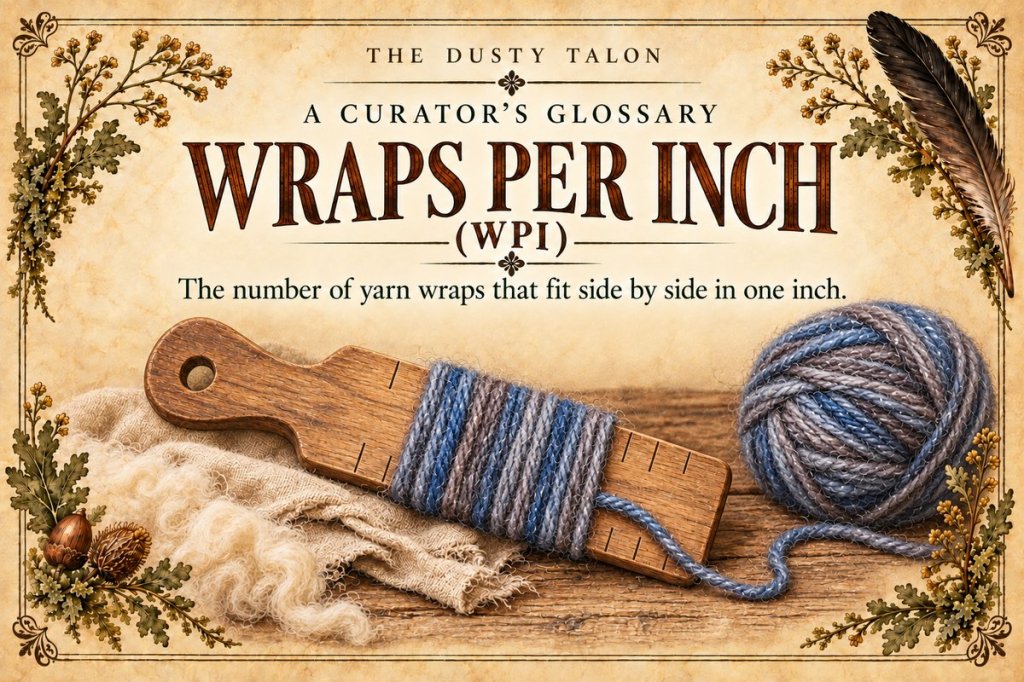
    WPI means wraps per inch – the number of wraps of yarn that fit side by side within one inch. It offers a practical way to estimate yarn thickness, especially when working with handspun or yarn whose label has wandered off.

    To measure, wrap the yarn around a ruler or a smooth straight tool. Let the strands touch without overlapping, stretching them tight, or squashing them together. Count the wraps across one inch.

    More wraps generally indicate a finer yarn; fewer wraps indicate a thicker one. Comparing your measurement with a WPI chart helps estimate the yarn’s weight category, such as fingering, sport, DK, worsted or bulky. Charts can differ, so treat the result as a guide. With handspun, check several sections to get a sense of any variation.

    WPI is a starting point rather than a promise of how the yarn will knit or crochet. Fiber, texture and construction also affect the finished fabric.

    Curator’s Note: WPI measures yarn thickness. Stitch gauge measures your stitches in fabric. Use WPI to help choose a starting point, then make a swatch to see how your yarn behaves.

  • Earring Size

    Earring Size

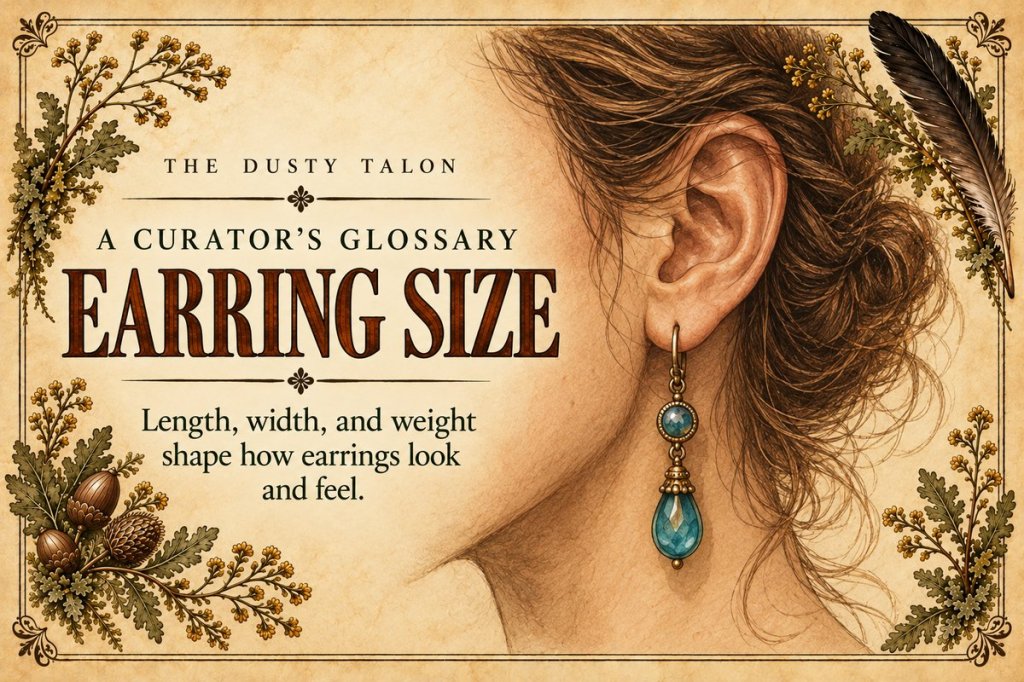
    A photograph can show an earring’s details beautifully. Its measurements help you picture wearing it.

    Length tells you how far an earring hangs – but check where that measurement begins. Total length may include the hook or stud, while drop length may describe only the decoration below it. Sellers use these terms differently.

    Width helps you judge its presence. A slender drop and a broad pendant can have the same length and look quite different.

    Weight matters for comfort, too. A long, delicate earring may weigh less than a shorter, solid design. When a listing includes weight, check whether it is for earring or the pair.

    For a useful comparison, measure a pair you already enjoy wearing. Hold a ruler beside it and compare those dimensions with the listing.

    Curator’s Note: Size describes more than length. Consider the earring’s shape, movement and weight alongside its measurements to find what feels right for you.

  • Crimp

    Crimp

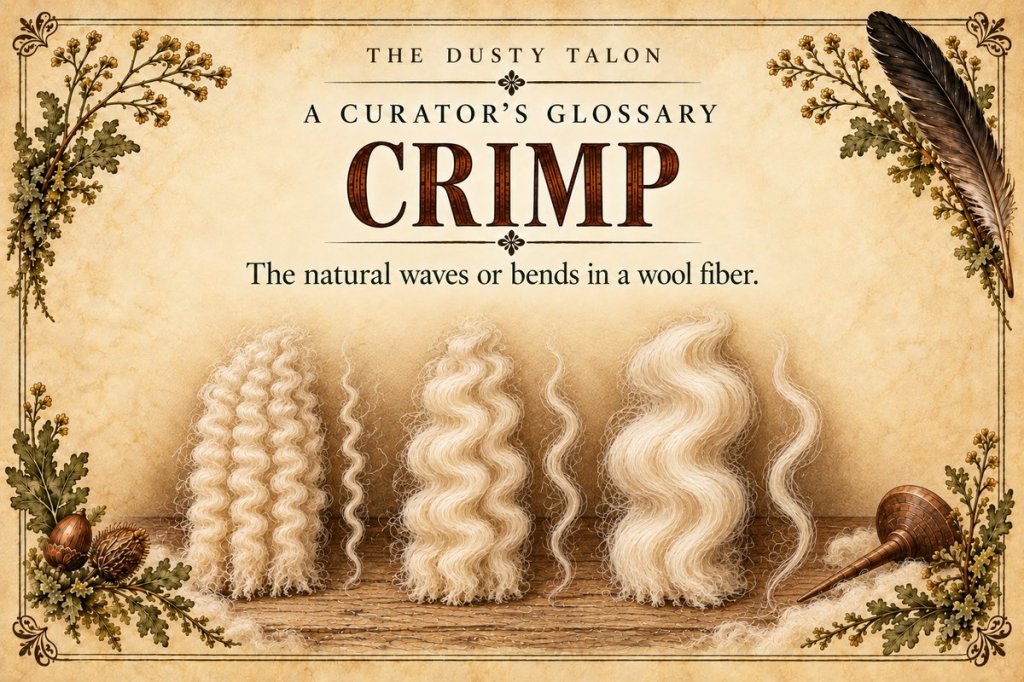
    Wool has a little spring built into it.

    Crimp is the natural waviness of a wool fiber. Look closely at an unspun lock and you may see fine, closely spaced ripples or broader, more open waves.

    Those bends help keep fibers from packing tightly together, creating space for insulating air. Crimp also contributes to wool’s bounce and its ability to recover after stretching or compression.

    Crimp is part of the fiber before spinning begins. Twist is added by the spinner as the fibers become yarn.

    Curator’s Note: When you squeeze a springy skein and feel it puff back into shape you’re feeling the combined effects of the fiber and the way the yarn was made. Crimp is one small detail behind that familiar woolly character.

  • Bracelet Fit

    Bracelet Fit

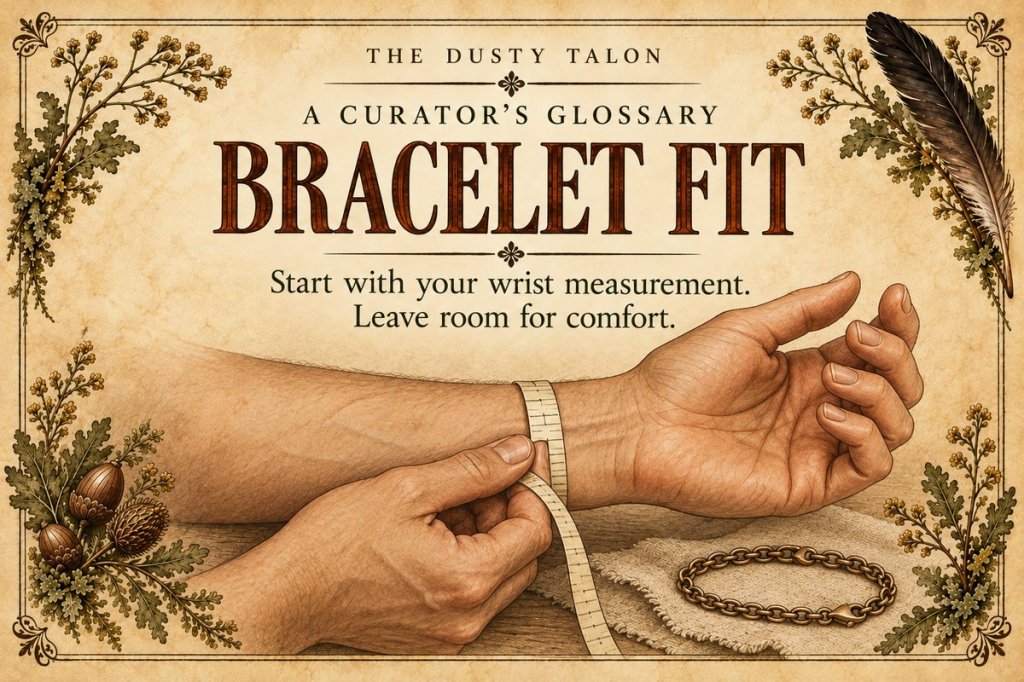
    A good bracelet fit starts with your wrist – and how you like to wear your jewelry.

    Wrap a soft measuring tape around your wrist where the bracelet will sit. Keep it comfortably against your skin without pulling tight. You can also use a strip pf paper, mark it where the ends meet and measure it against a ruler.

    That gives you your wrist measurement. The bracelet itself may need a little extra room for movement depending on its design and your preferred fit.

    For a flexible chain or clasp bracelet, these allowances offer a good starting point:

    • Close Fit: add approximately 1/4″ – 1/2″
    • More Movement: add approximately 3/4″ – 1″

    Chunky beads and thick links take up space inside the bracelet, so they may require additional length beyond your usual allowance. There is no single adjustment that works for every bead size or design.

    For example, a 6-inch wrist plus a 1/2-inch allowance suggests a 6 1/2-inch slim bracelet. A chunky bracelet of that same length may feel much tighter.

    A delicate chain, a chunky beaded bracelet and a rigid cuff can feel quite different even when their listed measurements look similar. Always check the maker’s sizing guidance. A closed bangle also needs to pass over your hand.

    Curator’s Note: Wrist size and bracelet length are different measurements. Look for whether a listing gives the bracelet’s total length, its inside circumference or the wrist size it is intended to fit.

  • Twist & Ply

    Twist & Ply

    A skein of yarn begins with loose fibers – and a little twist.

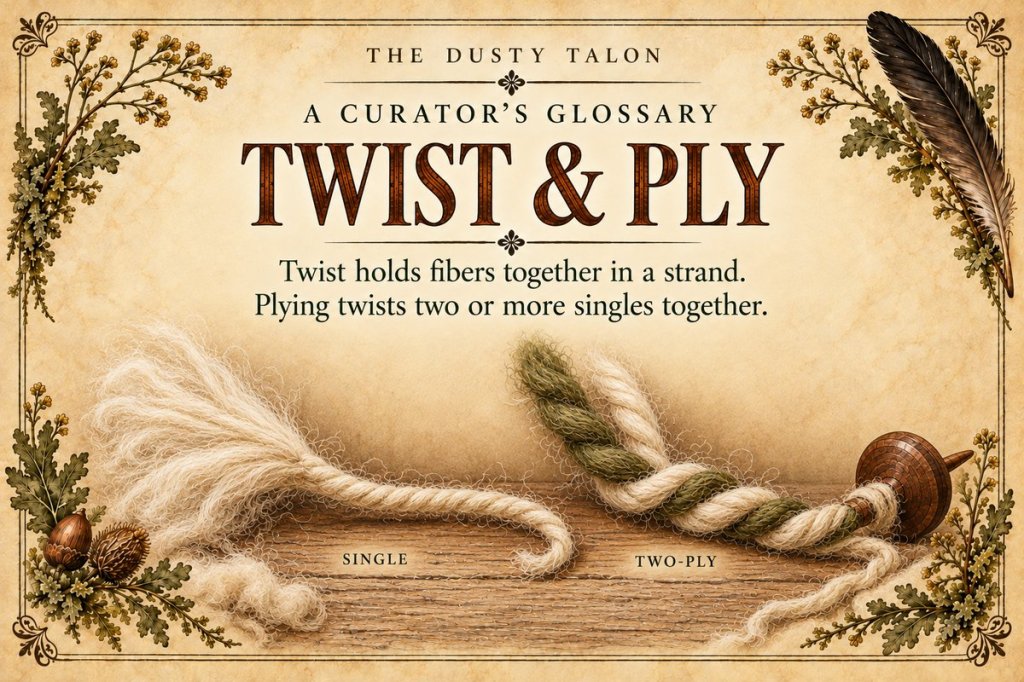
    Twist winds those fibers around one another, helping hold them together as a continuous strand. An unplied strand is called a singles yarn. It can be used on its own or combined with others.

    Plying twists two or more singles together, usually in the opposite direction from their original spinning. Two singles makes a 2-ply yarn; three makes a 3-ply.

    The amount of twist and the way a yarn is plied help shape its character, from the way its colors mingle to how it feels and behaves in your stitches.

    Curator’s Note: Ply describes a yarn’s construction, not a universal thickness. A 2-ply yarn can be thin or bulky depending on the singles used to make it.

  • Work Hardening

    Work Hardening

    A hammer does more than leave a mark.

    Work hardening happens when metal becomes harder and more resistant to further shaping through actions such as hammering, bending, or rolling.

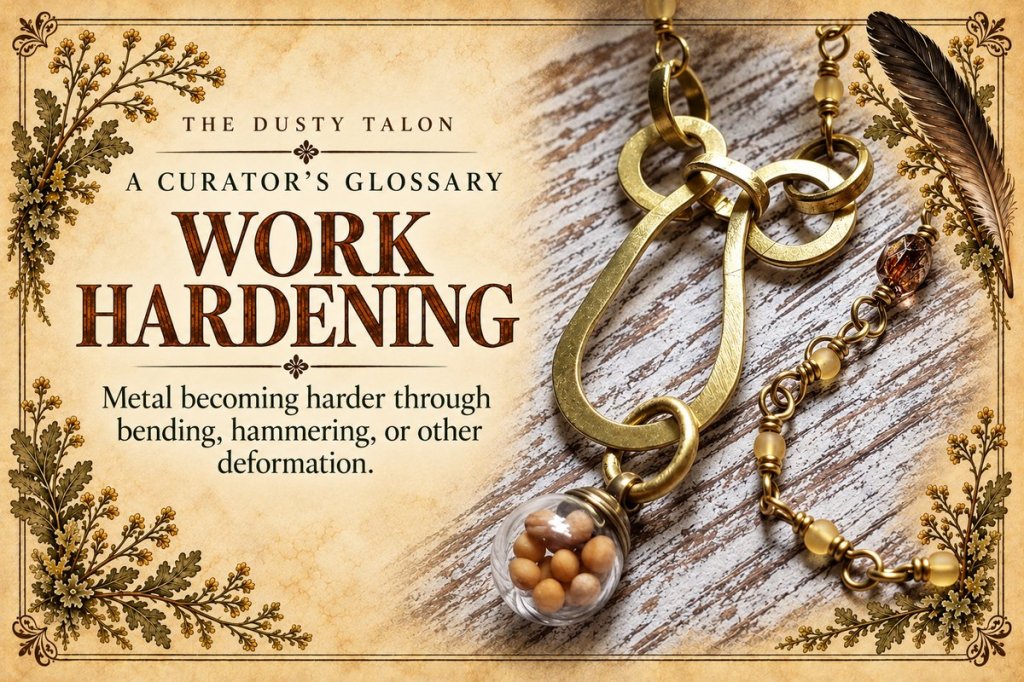
    The elongated links pictured here are from my own jewelry work. Hammering helped shape and texture them while also hardening the metal.

    That change can be useful when a finished piece needs to hold its shape. During construction though, continued working can leave metal less able to bend without cracking. A maker may pause to anneal it, restoring softness before continuing.

    Curator’s Note: Work hardening and annealing often take turns at the bench – one hardens the metal through shaping and the other restores its ability to be shaped.

  • Staple Length

    Staple Length

    Before wool becomes yarn its length helps shape the story.

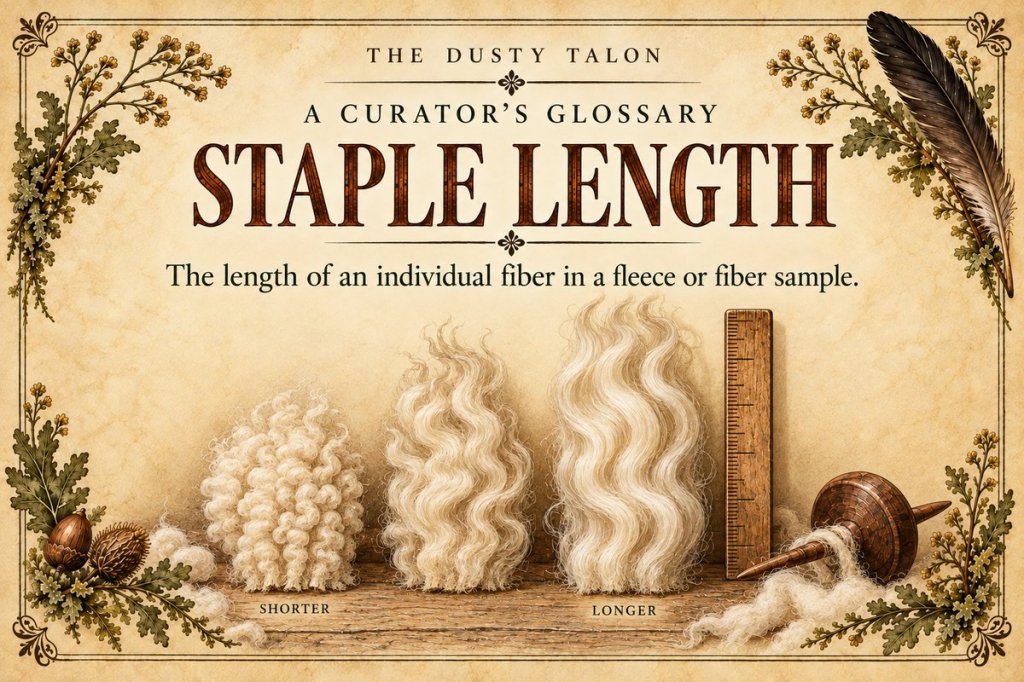
    Staple length describes the length of a lock of wool – the small bundle of fibers that grows together in a fleece. It is usually given in inches or centimeters and varies between breeds and individual fleeces.

    For a handspinner that length helps guide how the wool is prepared and how the fibers are drawn out during spinning. Longer and shorter fibers behave differently in the hands, so the spinner adjusts their technique to suit them.

    Staple length is one part of the picture. Fiber thickness, crimp, preparation and twist also help determine the character of the finished yarn.

    Curator’s Note: Staple length measures the wool before spinning. Yardage measures the yarn afterward. Both tell us something useful about what we are holding.

  • Malleable

    Malleable

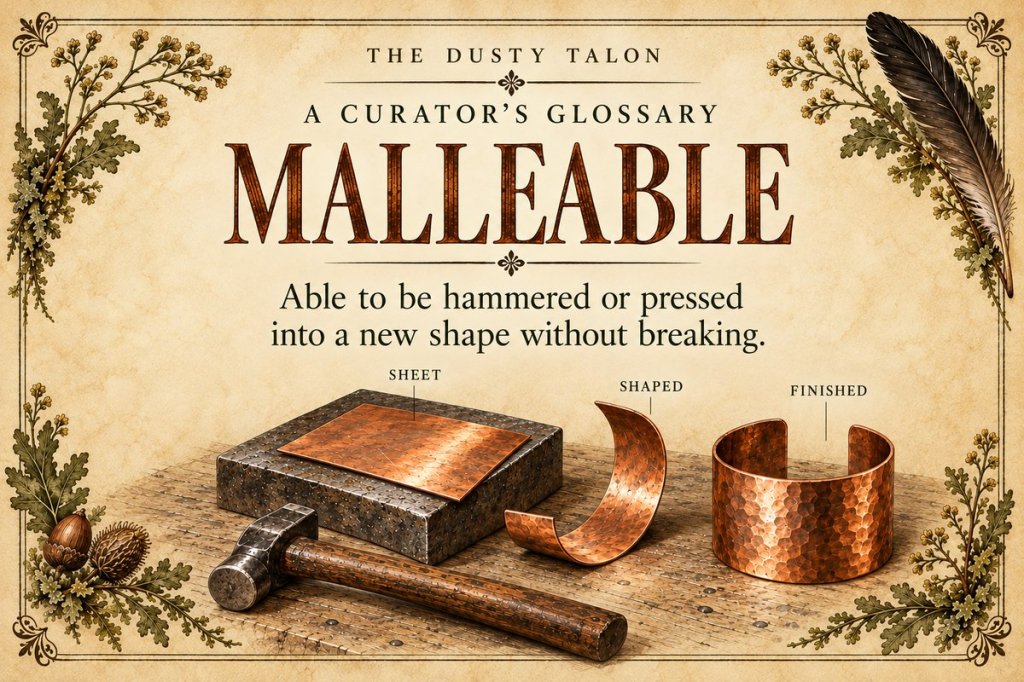
    A sheet of copper doesn’t begin life as a cuff. Getting it there takes tools, a little persuasion and a useful property called malleability.

    Malleable describes a material that can be hammered or pressed into a new shape without breaking. In jewelry making, that means metal can be flattened, textured and formed into something far different from where it started.

    Copper, silver and gold are familiar examples. Each responds differently under the tools, and the metal’s alloy and condition affect how readily it can be worked.

    There’s a catch, though: workable doesn’t mean endlessly workable. As many jewelry metals are hammered or bent they become harder and less willing to move – a process called work hardening. Keep pushing them too far and cracks can develop. Annealing, a controlled heating process, restores softness so the shaping can continue.

    That hammered copper cuff in the illustration tells both stories: malleability allows the metal to take its shape, while working it changes how it behaves.

    A small word for a property that opens up a whole world of possibilities.