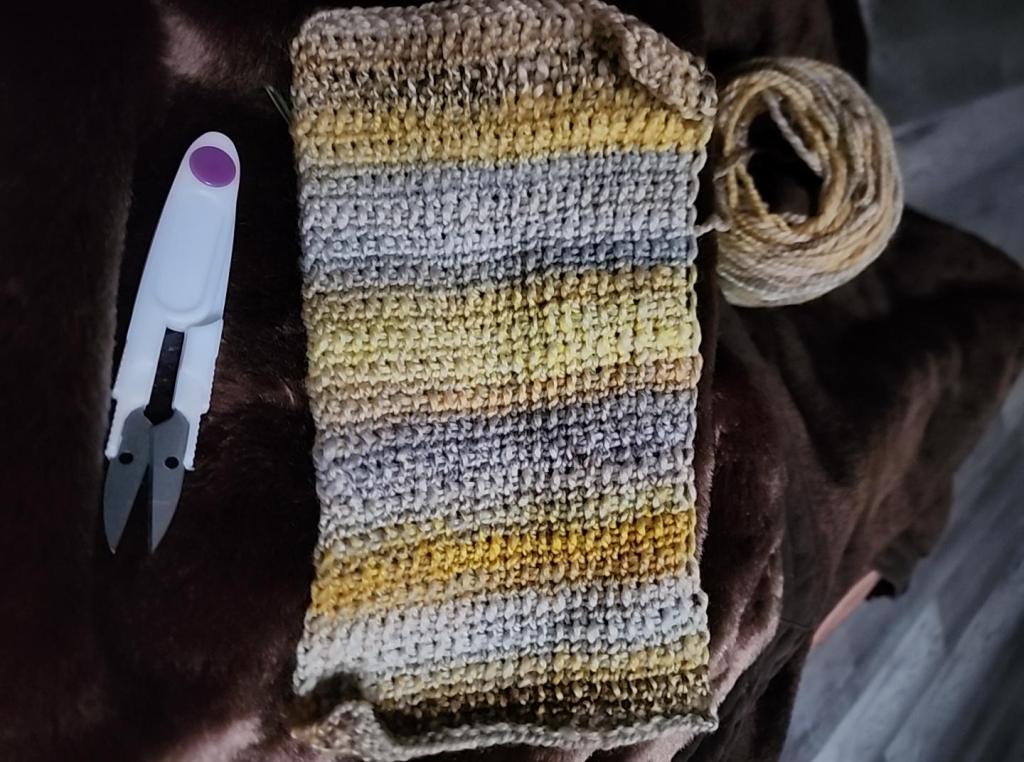
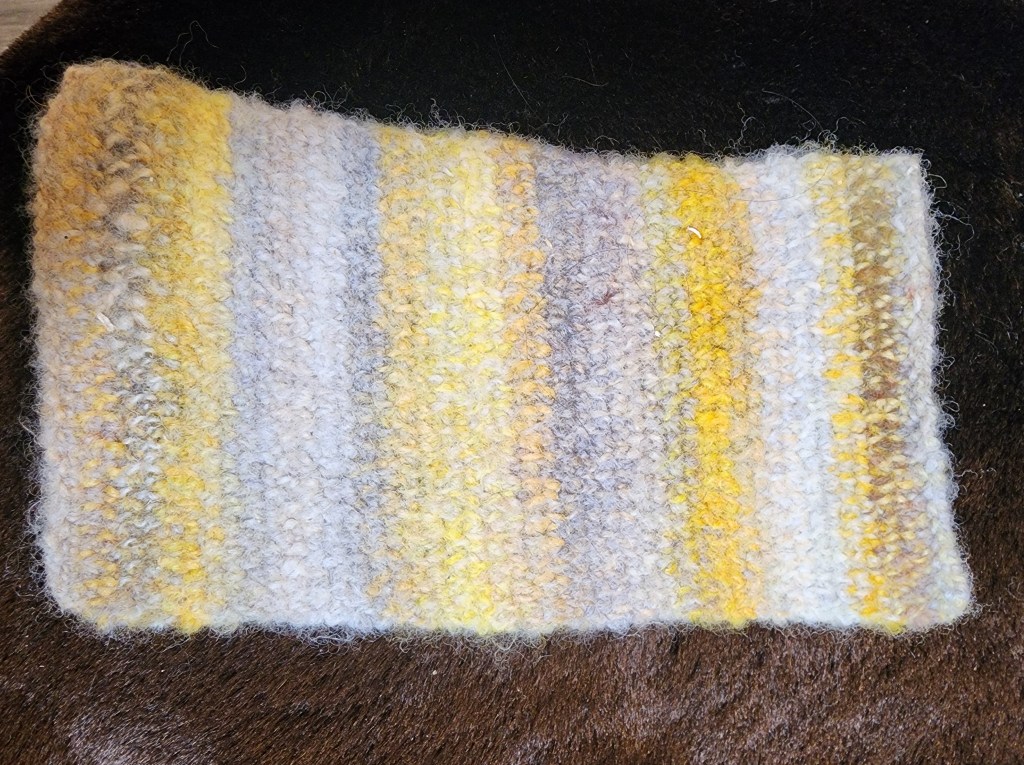
You put a perfectly good wool thing in the wash, It goes in one size and comes back out considerably smaller, thicker, and perhaps capable of fitting a moderately fashionable squirrel.
What the heck happened?
The short answer is that wool fibers are covered in microscopic scales.
Those scales are part of the outer surface of each fiber. Add moisture, heat, soap, and most importantly-agitation, and the fibers start moving against one another. The scales catch. The fibers migrate closer together. Eventually, they become tangled tightly enough that they don’t simply return to where they started.
The fabric gets smaller.
But it also gets denser, thicker, and more cohesive.
And that’s where things get interesting.
Shrinking, Felting, and Fulling Aren’t Quite the Same Thing
We tend to call all of it “Shrinking”, but there are useful distinctions.
Shrinkage simply means the finished object got smaller. Wool can shrink somewhat without becoming heavily felted.
Felting usually refers to loose wool fibers being deliberately tangled together to create fabric. Needle felting does this mechanically with barbed needles. Wet felting uses moisture, agitation and often soap.
Fulling starts with fabric that already exists-something knitted, crocheted, or woven-and deliberately encourages those wool fibers to tangle together.
That’s what happens when I make a wool piece larger than I ultimately want it, then wash it intentionally so the stitches begin to disappear and the fabric becomes denser.
Same wool, very different fabric.
Why Doesn’t Every Wool Behave the Same Way?
Because “wool” isn’t one material with one set of characteristics.
Different sheep breeds produce fibers with different diameters, staple lengths, crimp, scale structures, and other characteristics. How the fiber was processed matters too. How the yarn was spun matters. Blending wool with bamboo, silk, synthetic fibers, or other materials can change how the finished fabric behaves.
Even two pieces that look similar before washing can come out differently.
That’s one of the reasons fiber work involves experimentation.
Sometimes you can make an educated prediction.
sometimes the wool has other plans.
What About Superwash Wool?
Superwash wool has been treated so those microscopic scales don’t interact in the usual way. Depending on the treatment, the scales may be altered or coated to reduce their ability to grab onto other neighboring fibers.
That’s why superwash wool can generally tolerate washing better without felting the way that untreated wool does.
It also means that if your goal is intentional fulling, untreated wool is usually the much more cooperative accomplice.
So is Shrinking Wool Bad?
Only when you didn’t mean to do it.
Accidentally turning a beloved sweater into children’s clothing? Bad day.
Deliberately using the same behavior to make a dense, sturdy piece of wool fabric?
That’s not a mistake.
That’s a technique.